
It’s January, and while the snow might be piling up outside, it’s the perfect time to get a head start on the growing season. Starting seeds indoors in January can give your plants a significant advantage, especially in a shorter growing season like mine here in Zone 5.
While you might be thinking: “January? Isn’t that a bit early?” I get it! January is an ideal time to plan and begin planting for a stunning flower garden. Many flowers require early indoor starts or special treatments, like stratification, to ensure successful germination. Some of the flowers I’m starting this month have a 90-120 day maturity period, and others may not flower until the second year. By starting them now, I can grow strong plants that will be ready to transplant and harden off come May.
Since I’m in Zone 5 in Canada, planting outdoors isn’t possible without a greenhouse or cold frame. However, if you’re in a different growing zone (check out this post to learn more about grow zones), you can calculate the best time to start flowers by considering your last frost date and counting backward based on the plant’s maturity timeline. This will give you a target plant-out date.
I also have a blog post detailing everything you need to know about starting seedlings, including what supplies to gather, how to keep things sustainable, and the best soil mixes to use.
Anyway, here are the seeds I’m sowing for the flower Garden in January!
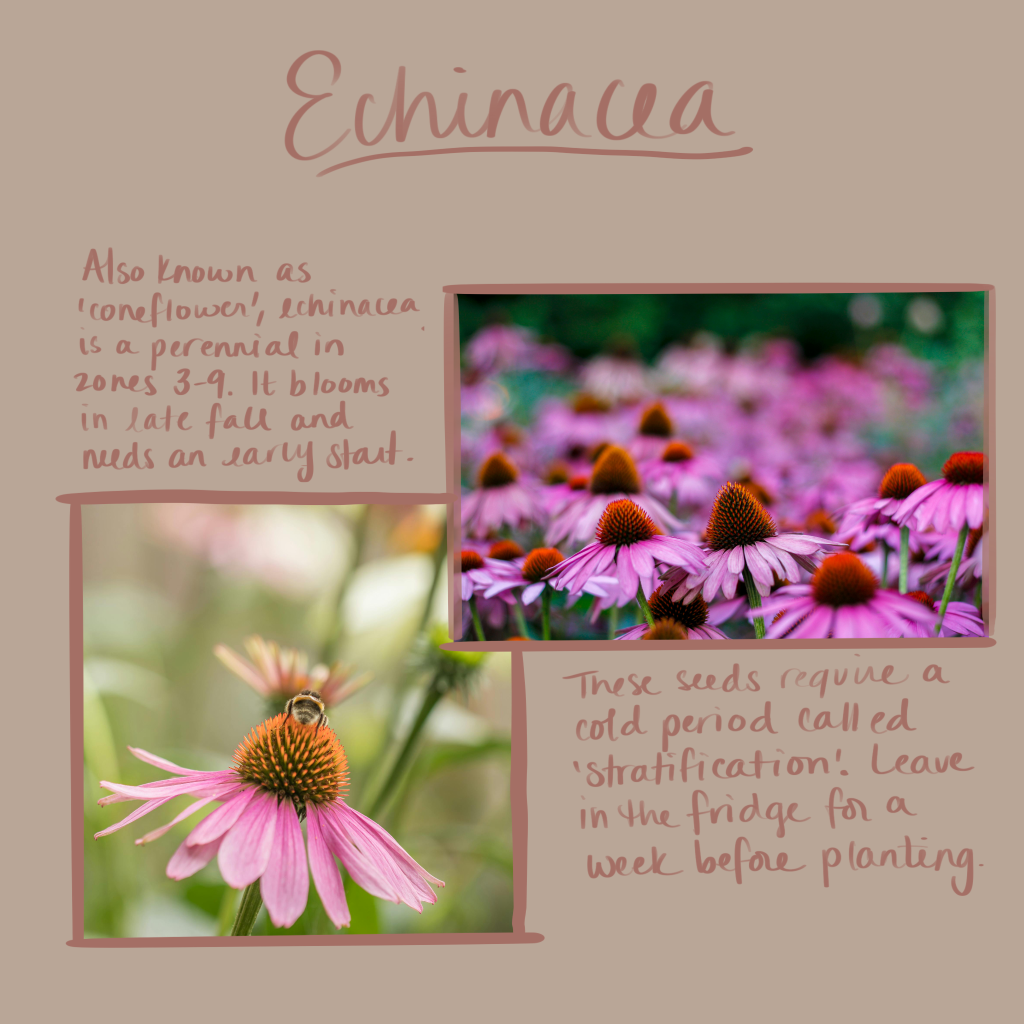
Echinacea (Coneflower)
Echinacea, also known as coneflower, is a hardy perennial perfect for zones 3-9. Its stunning purple blooms appear in late fall and attract pollinators.
- Special Note: Echinacea seeds need stratification. Place them in the fridge for a week before planting to mimic their natural winter conditions.

Foxgloves (Digitalis)
Foxgloves are elegant biennials that thrive in zones 4-9. Starting them early may even result in flowers during their first year.
- How to Plant: Sow seeds lightly on top of the soil since they require light to germinate. Provide plenty of light and keep the soil moist.

Poppies
Poppies are a delightful and effortless flower to grow.
- When & How: Sprinkle the seeds over the snow or where you’d like them to grow. As the weather warms, the seeds will germinate and create a stunning spring display.
This is a fantastic way to enjoy a burst of vibrant color with minimal effort.
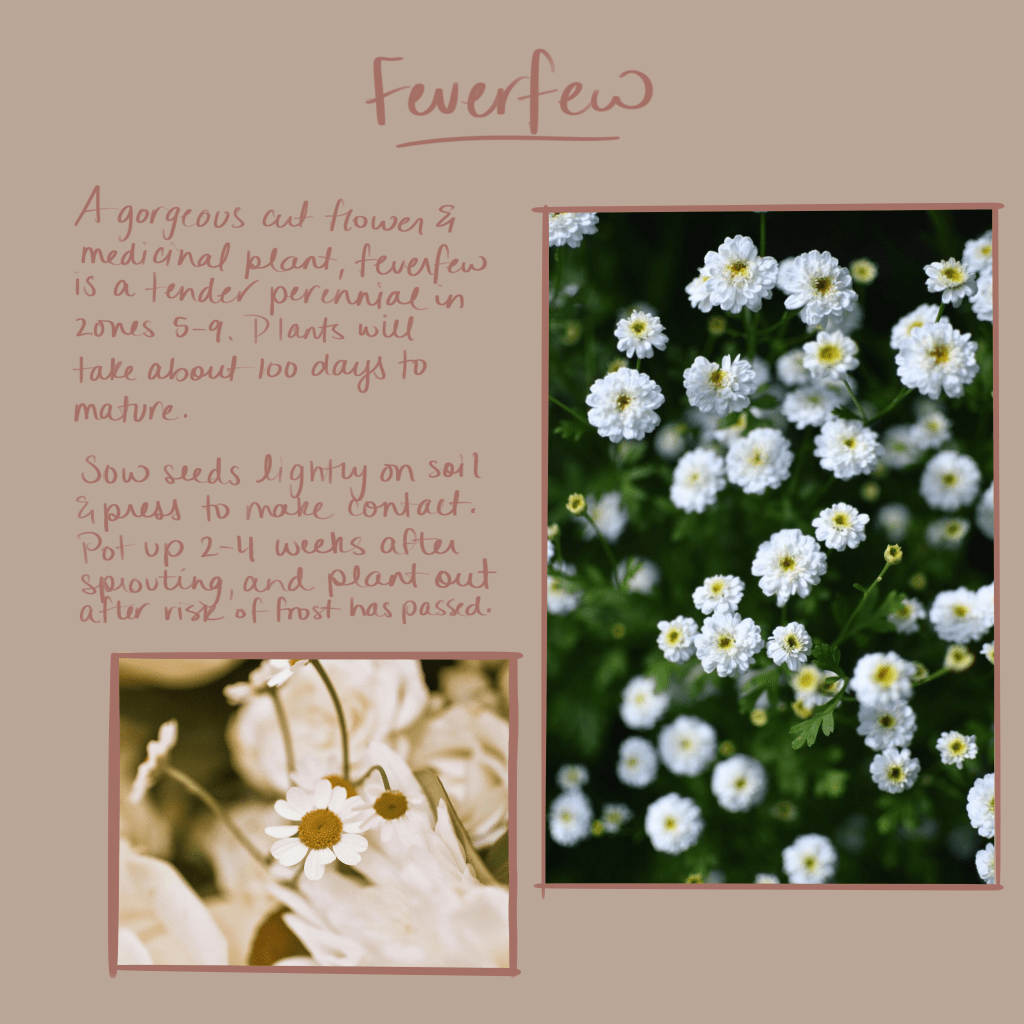
Feverfew
Feverfew is both a gorgeous cut flower and a medicinal plant. It’s a tender perennial suitable for zones 5-9 and takes about 100 days to mature.
- Planting Tips:
- Sow seeds lightly on the soil’s surface without covering them, as they need light to germinate.
- Pot seedlings up 2-4 weeks after sprouting and transplant outdoors once the weather warms.

Rose Mallow (Hibiscus moscheutos)
A stunning native flower in Ontario, rose mallow is a hardy perennial for zones 4-9. Its large, showy blooms are a spectacular addition to any garden.
- Planting Tips:
- Soak seeds for 24 hours before planting to improve germination.
- Sow seeds lightly over soil, as they need light to sprout.
- Water plants generously while they are getting established.
- Timing: These plants take up to 110 days to mature and may not flower in their first year. Starting early increases your chances of blooms when they’re transplanted outdoors.
- Note: Rose mallow is a specific type of mallow, but January is a good time to start all mallow plants! They are also called Lavaterra.
Seed Starting Tips for Success
- Light: Most seedlings need at least 14-16 hours of light per day. Consider using grow lights or placing your seedlings near a sunny window.
- Soil: Use a seed starting mix or make your own!
- Water: Keep the soil consistently moist but not soggy. A lot of seedlings can be prone to “dampening off” if the soil is too moist. If you have this issue, use a fan to circulate the air and dry out the soil faster.
- Temperature: Maintain a warm temperature for your soil. If you are growing them in a really cold area, you might benefit from using a heat mat – these are the ones I use!
- Thinning: Once your seedlings have a few true leaves, thin them out to give them enough space to grow.
Seed Starting Sustainability Tips
- Reuse containers: Repurpose yogurt cups, egg cartons, plastic clamshells, or even toilet paper rolls as seed-starting containers.
- Collect rainwater: Use rainwater to water your seedlings.
- Compost your kitchen scraps: Create your own nutrient-rich soil for your seedlings. Use a Lomi composter to make compost easily indoors!
Starting seeds indoors in January might seem daunting, but it’s a rewarding experience. With a little preparation, you can give these flowers the best possible start and enjoy a garden full of beauty and life in the spring!
Looking to start your veggie plants this month as well? Check out our January Veggie Seed Guide here.
Please note this post contains affiliate links.
 Gather With Kate
Leave a comment